There are countries that impress. And there are countries that feel right.
New Zealand belongs to the second category.
With a population of just over 5 million people (Stats NZ), this island nation in the South Pacific consistently ranks among the world’s most livable societies. It combines political stability, economic resilience, environmental purity, and a deeply ingrained culture of balance. For many international students and professionals, New Zealand represents not only a place to study or work — but a place to build a life.
A Brief History: Foundations of a Modern Nation
New Zealand’s story begins in the 13th century, when Polynesian navigators settled the islands and developed the Māori civilization — a culture rich in oral traditions, navigation skills, artistry, and spiritual connection to land and sea.
European contact began in 1642 with Dutch explorer Abel Tasman, followed by British navigator James Cook in 1769. The 19th century brought structured British settlement and, in 1840, the signing of the Treaty of Waitangi between the British Crown and Māori chiefs. The treaty remains a constitutional cornerstone of modern New Zealand.
Today, New Zealand is an independent parliamentary democracy within the Commonwealth. Its legal and educational systems are rooted in British traditions, and English is the dominant language of communication, business, and academia.
Geography: Nature at the Center of National Identity
Few countries offer such geographic diversity within such a compact territory. Spread across the North and South Islands and more than 700 smaller islands, New Zealand covers approximately 268,000 square kilometers.
Within a single day’s drive, one can encounter:
- Snow-capped alpine ranges
- Active geothermal zones
- Volcanic plateaus
- Temperate rainforests
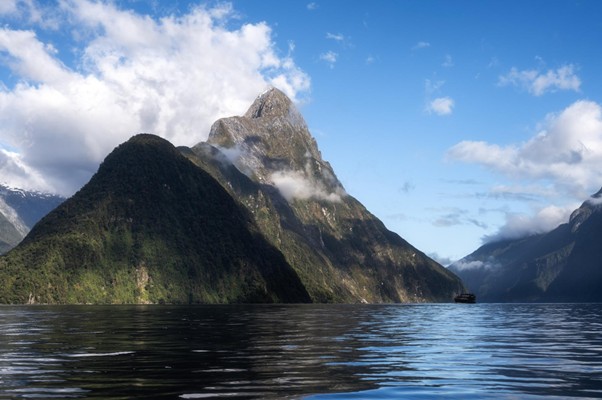
- Fjords and glacial lakes
- Subtropical beaches
The Southern Alps stretch along much of the South Island, while the North Island is known for its volcanic landscapes and geothermal activity, particularly around Rotorua.
New Zealand maintains strong environmental protections. According to the Organisation for Economic Co-operation and Development environmental data, the country performs well in air quality compared to many industrialized nations.
Clean air, low population density, and access to green spaces are not luxuries — they are daily realities.
An English-Speaking Society with a Pacific Soul
New Zealand is fully integrated into the global English-speaking world. Education, government, and business operate in English, making it highly accessible to international students.
Yet culturally, the country is more layered.
Modern New Zealand blends:
- British institutional heritage
- Māori cultural traditions
- Pacific Island influences
- Growing Asian and European communities
Māori language and customs are actively preserved and visible in public life. Official ceremonies, public institutions, and schools incorporate Māori traditions. Greetings such as “kia ora” are used naturally across society.
This integration of indigenous identity into national life is one of the defining features of contemporary New Zealand culture.
Cities That Combine Opportunity with Livability
Auckland — Economic Engine of the Pacific
As the largest city, Auckland generates a significant share of national GDP. It is a financial, logistics, and technology hub with strong international connections. Yet it remains a coastal city surrounded by beaches, islands, and volcanic hills.
Wellington — Creative and Political Capital
Wellington, the capital, houses government institutions and a thriving creative sector. It is known for its independent cafés, film industry, and strong arts culture.
Christchurch — Innovation and Resilience
Following major earthquakes in 2010–2011, Christchurch underwent large-scale redevelopment and now stands as one of the country’s most modern and forward-thinking cities.
Queenstown — Lifestyle as Identity
Globally recognized for adventure tourism, Queenstown embodies the outdoor lifestyle that defines much of New Zealand’s identity.
The Kiwi Lifestyle: Measured, Outdoor, Balanced
New Zealanders — commonly called “Kiwis” — are known for modesty, self-reliance, and practicality. Status is less emphasized than competence. Professional achievement matters, but not at the expense of personal wellbeing.
Work-Life Balance
New Zealand consistently ranks highly for life satisfaction in the OECD Better Life Index. Working hours are generally reasonable, and flexible arrangements are common.
Weekend Culture
Leisure time is typically spent outdoors. Popular activities include:
- Hiking (tramping)
- Surfing
- Sailing
- Skiing
- Camping
- Cycling
Outdoor recreation is accessible and affordable. National parks and public trails are well maintained and often free.
Family life plays a central role in social structure. Communities are tight-knit, and local sports clubs and volunteer groups are common.
Stability, Governance, and Safety
New Zealand regularly ranks among the most peaceful countries in the world, according to the Institute for Economics and Peace Global Peace Index.
Transparent institutions and low perceived corruption levels contribute to strong public trust. According to Transparency International’s Corruption Perceptions Index, New Zealand remains among the least corrupt countries globally.
For international residents, this translates into a sense of everyday security and predictability.
A Small Nation with Global Influence
Despite its modest population, New Zealand has produced individuals of global impact:
- Ernest Rutherford — pioneer of nuclear physics
- Edmund Hillary — first climber to reach Mount Everest’s summit
- Peter Jackson — internationally acclaimed filmmaker
- Lorde — global recording artist
Their achievements reflect a national culture that values education, independent thinking, and innovation.
What Living in New Zealand Truly Means
Living in New Zealand means:
- Breathing clean air
- Having space — physical and mental
- Participating in a multicultural yet cohesive society
- Experiencing political stability
- Building a career without sacrificing personal wellbeing
It is not a country of extremes. It is a country of balance.
New Zealand does not compete to be the largest economy or the fastest-growing megacity. Instead, it quietly cultivates one of the most sustainable and livable environments in the developed world.
For students, professionals, and families alike, New Zealand offers something increasingly rare: a place where ambition and wellbeing can coexist.
And in today’s world, that may be its greatest strength.