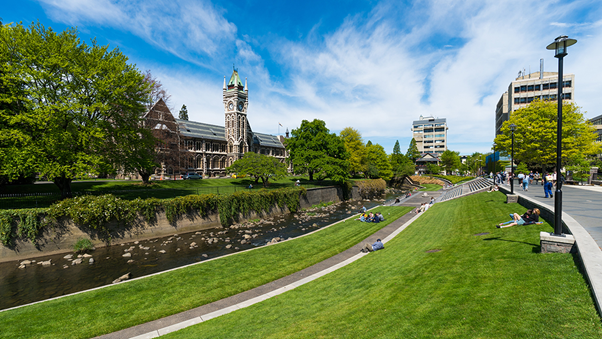
Education in New Zealand is not built around pressure.
It is built around preparation.
From the first years of school to postgraduate research, the system is designed to develop independence, critical thinking, and practical capability. It does not rush students — it shapes them.
And that philosophy is visible at every level.
School Education (Years 1–13): Building Confidence Before Competition
In New Zealand, students attend school for 13 years, typically from age 5 to 18. Primary and secondary education are part of a continuous structure, with increasing academic depth as students progress.
But what stands out is not the duration. It is the approach.
New Zealand schools emphasize:
- Critical thinking over memorization
- Communication skills
- Creativity and problem-solving
- Collaboration
- Cultural awareness
Students study core subjects such as English, mathematics, science, and social studies. As they move into senior secondary years (Years 11–13), they begin specializing — choosing combinations of subjects aligned with their interests and future goals.
The qualification earned in the final years is the NCEA (National Certificate of Educational Achievement). Unlike rigid exam systems in many countries, NCEA allows students to accumulate credits across subjects, creating flexibility and reducing one-exam pressure.
Classrooms are interactive. Teachers encourage questions. Debate is normal. Students learn how to present, research, and analyze — not simply recall.
What makes school education here distinctive is its balance:
Academic development exists alongside sport, arts, leadership programs, and outdoor education. Confidence is developed alongside knowledge.
By the time students graduate, they are not only academically prepared — they are socially and intellectually independent.
Tertiary Education: A System Built on Choice
After school, students enter tertiary education — and here the system becomes even more flexible.
New Zealand’s tertiary sector includes:
- Public universities
- Institutes of Technology and Polytechnics
- Private Training Establishments (PTEs)
- A small number of private universities
All qualifications are regulated under the New Zealand Qualifications Framework (NZQF), ensuring national consistency and international recognition.
But within that structure, students can choose very different learning experiences.
Public Universities: Depth, Research, Global Recognition
New Zealand has eight public universities. All are internationally ranked and recognized for research excellence.
Bachelor’s Degrees
Duration:
- Typically 3 years
- 4 years for engineering and certain professional programs
Bachelor’s programs focus on building strong theoretical foundations. Students learn to:
- Conduct academic research
- Write analytical essays
- Work in multidisciplinary teams
- Apply theory to real-world problems
Popular areas include business, engineering, IT, health sciences, environmental studies, law, and the arts.
University education in New Zealand is not about passive lectures. Tutorials, group discussions, lab work, and independent research are central components.
Students are expected to think critically, challenge ideas, and form their own arguments.
Master’s Degrees
Duration: 1 to 2 years
Master’s programs are either taught (coursework-based) or research-focused.
They are intensive, specialized, and often include:
- Industry-linked projects
- Research dissertations
- Capstone consulting assignments
- Internship components (in certain programs)
For international students, New Zealand’s master’s programs are particularly attractive because they combine academic depth with employability.
Private Training Establishments (PTEs) and Private Institutions: Practical, Focused, Industry-Driven
This is where New Zealand becomes especially interesting.
PTEs are private institutions registered and quality-assured by the national authority. They focus on industry-oriented education and often specialize in niche sectors.
Fields commonly offered include:
- Information technology and cybersecurity
- Hospitality management
- Animation and digital design
- Business and entrepreneurship
- English language training
- Healthcare support
- Tourism
Programs range from certificates and diplomas to bachelor-level qualifications.
What distinguishes PTEs is not prestige branding — it is precision.
Class sizes are smaller. Programs are often directly designed with industry input. Learning is hands-on. Assessment may involve real projects instead of purely theoretical exams.
For students who prefer practical application and quicker pathways into employment, PTEs offer an attractive alternative to traditional universities.
They are particularly strong in preparing students for roles in growing sectors where skill demand is immediate.
Institutes of Technology & Polytechnics: Applied Knowledge
These institutions sit between universities and PTEs in style — delivering structured qualifications with strong practical orientation.
Students in these institutions often spend significant time in:
- Workshops
- Laboratories
- Simulation environments
- Industry placements
Diplomas typically last 1–2 years, while applied bachelor’s degrees run for 3 years.
The focus is clear: employability.
What Makes the System Different?
Many countries offer education. Few offer integration.
New Zealand’s advantage lies in several key characteristics:
- Coherence
Every qualification fits into a national framework. Students can move between levels, upgrade credentials, and follow clear progression pathways. - Balance Between Theory and Practice
Universities emphasize research and theory. PTEs emphasize applied skills. Polytechnics bridge both.
Students choose their style — without sacrificing recognition. - English-Speaking Academic Environment
All mainstream education is delivered in English, providing global communication advantage. - Student-Centered Approach
Professors are accessible. Institutions are not overwhelmingly large. Students are rarely anonymous. - Integration With Industry
Internships, industry projects, and employer collaboration are common across tertiary institutions.
What Are Students Actually Learning?
Beyond subject matter, students in New Zealand learn:
- How to research independently
- How to communicate professionally
- How to collaborate in multicultural teams
- How to solve real problems
- How to present and defend ideas
These transferable skills are often what distinguish graduates internationally.
The Bigger Picture
Education in New Zealand is not built to overwhelm students with intensity. It is built to prepare them for adulthood — academically, professionally, and personally.
It values:
- Confidence over pressure
- Skill over rote memory
- Practical application over abstract isolation
- Clear pathways over rigid structures
For families considering school education, students planning undergraduate studies, or professionals seeking a master’s degree, the system offers flexibility without confusion.
And that clarity — combined with quality — is what makes New Zealand’s education system quietly powerful.